
- by x32x01 ||
Imagine spending $40,000 on security research without knowing whether you'll find anything worth selling. Six days later, you have a Chrome exploit chain that earns a $250,000 bounty.
That's the kind of result XBOW reported after using AI agents to discover and chain three vulnerabilities in Chrome. The research highlights a major shift in vulnerability discovery: AI can help security researchers find and connect bugs much faster than traditional workflows.
But the story isn't just about AI finding vulnerabilities. It's about the cost of research, the risks of spending money on an uncertain result, and what happens when AI makes high-end security research more accessible.
The result was a browser exploit that could escape Chrome's sandbox and execute code outside it.
In their demonstration, the researchers opened <span>calc.exe</span> on Windows. The significance wasn't the calculator itself. It was demonstrating that code execution could reach outside the browser's security boundary.
The attack scenario was particularly concerning because it started with a normal web page. The demonstrated chain did not require the victim to download a file or manually grant a permission.
Chrome's sandbox is designed to limit what compromised browser processes can do. Escaping it can turn a browser vulnerability into a much more serious security problem.
Individually, a vulnerability may offer limited control over a process. Chaining multiple vulnerabilities can create a path from an initial bug to a much more powerful result.
That's what makes exploit development so difficult. Finding a bug is one challenge. Turning several bugs into a reliable attack is another.
XBOW reported that this research took six days, with an initial submission in an earlier effort taking approximately two months.
The reported workflow used AI agents powered by a publicly available model rather than relying exclusively on a secret, custom-built model.
That distinction matters. If comparable capabilities are available through public AI systems, the potential impact extends beyond a single research team.
However, speed does not mean the process was fully autonomous. Human researchers selected targets, organized the work into five campaigns, reviewed agent results, and decided which findings to combine.
In other Chromium and Firefox tests, the model reportedly found bugs and useful exploitation primitives without independently completing an entire exploit chain.
The real breakthrough is not simply finding bugs with AI. It's reducing the time and effort required to turn discoveries into a working chain.
XBOW spent approximately $40,000 on six days of research and reportedly received a $250,000 bounty.
But security research is not a guaranteed investment. A team can spend thousands of dollars and still end up with nothing that qualifies for a reward.
One of the vulnerabilities in this effort turned out to be a duplicate: another researcher had already reported it. XBOW had prepared a backup and replaced the finding within hours.
Without that backup, the entire chain could have been jeopardized.
This illustrates an important point about vulnerability research:
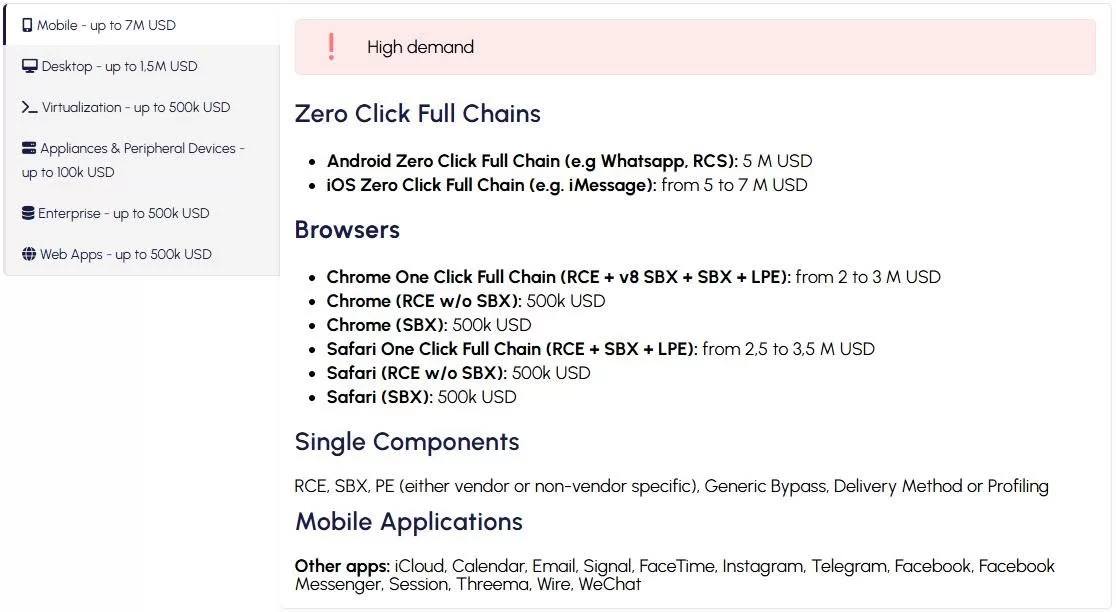
Crowdfense advertises an exploit acquisition program with payouts that can reach $1.5 million for qualifying exploits, depending on the target, capabilities, and applicable requirements.
You can review its official program here:
https://www.crowdfense.com/exploit-acquisition-program/
That figure should not be treated as a guaranteed price for the same Chrome chain. Buyers evaluate exploit capabilities, reliability, novelty, affected versions, and other conditions. Different programs also have different eligibility and submission rules.
Still, the difference between a $250,000 bounty and a potential seven-figure acquisition illustrates how valuable sophisticated exploitation capabilities can be.
GitHub announced changes to its public bounty payouts in July, reportedly reducing the maximum reward for critical vulnerabilities from $30,000 to $10,000 and for high-severity vulnerabilities from $20,000 to $5,000.
The reported explanation was the flood of AI-assisted submissions.
This creates an interesting divide in the security research market:
The important distinction is that generating a report is not the same as finding a valid, original vulnerability. Quality, reproducibility, and novelty still matter.
Human researchers still played important roles in choosing targets, dividing the work into campaigns, reviewing findings, and deciding how to combine vulnerabilities.
AI agents accelerated parts of the process, but the reported results do not establish that the model can independently discover and chain every vulnerability in every browser.
That distinction matters when evaluating claims about autonomous security research.
The more realistic takeaway is that AI can act as a force multiplier for experienced researchers. It can help them explore more possibilities and move through parts of the research process faster, while human judgment remains essential.
Simply closing and reopening Chrome may not be enough if an update has not been downloaded or installed. Check the About page and relaunch when requested.
Keeping your browser updated is one of the most practical ways to reduce exposure to known vulnerabilities.
If a complex browser exploit chain that once required months of work can be developed in days, researchers and organizations may be able to investigate more targets with the same budget.
But the same shift can increase competition, create more duplicate findings, and put pressure on bug bounty programs to distinguish high-value discoveries from automated noise.
The question isn't just how quickly AI can find a vulnerability. It's whether it can consistently find original bugs, develop reliable exploitation techniques, and produce results that meet a buyer's requirements.
For now, the XBOW report offers a striking example of what AI-assisted security research can achieve when combined with experienced human researchers.
And it leaves one question worth watching: If this level of research can be carried out against a complex browser, how much could AI-assisted research change the economics of security testing for smaller applications and widely used software projects?
One final note: I also have two creative XSS findings in WordPress Core that turned out to be duplicates. I'm waiting for the resolution before publishing a write-up.
The lesson is simple: AI can speed up vulnerability research, but novelty, validation, and responsible disclosure still determine whether a discovery has real value.
That's the kind of result XBOW reported after using AI agents to discover and chain three vulnerabilities in Chrome. The research highlights a major shift in vulnerability discovery: AI can help security researchers find and connect bugs much faster than traditional workflows.
But the story isn't just about AI finding vulnerabilities. It's about the cost of research, the risks of spending money on an uncertain result, and what happens when AI makes high-end security research more accessible.
🚨 What Did XBOW Discover?
Between August 2 and August 7, XBOW used AI agents to investigate Chrome and develop an exploit chain involving three vulnerabilities.The result was a browser exploit that could escape Chrome's sandbox and execute code outside it.
In their demonstration, the researchers opened <span>calc.exe</span> on Windows. The significance wasn't the calculator itself. It was demonstrating that code execution could reach outside the browser's security boundary.
The attack scenario was particularly concerning because it started with a normal web page. The demonstrated chain did not require the victim to download a file or manually grant a permission.
Chrome's sandbox is designed to limit what compromised browser processes can do. Escaping it can turn a browser vulnerability into a much more serious security problem.
🧩 The Three Bugs Behind the Exploit Chain
The exploit combined vulnerabilities in three different components:- V8: Chrome's JavaScript engine.
- WebP animation decoding: The code responsible for processing animated WebP images.
- Crashpad: The crash-reporting system, which includes components operating outside the browser sandbox.
Individually, a vulnerability may offer limited control over a process. Chaining multiple vulnerabilities can create a path from an initial bug to a much more powerful result.
That's what makes exploit development so difficult. Finding a bug is one challenge. Turning several bugs into a reliable attack is another.
🤖 Why Six Days Matters
High-end browser exploit research can require multiple specialists working together for months. Researchers need to find vulnerabilities, understand the affected components, develop exploitation techniques, and test whether the pieces work together.XBOW reported that this research took six days, with an initial submission in an earlier effort taking approximately two months.
The reported workflow used AI agents powered by a publicly available model rather than relying exclusively on a secret, custom-built model.
That distinction matters. If comparable capabilities are available through public AI systems, the potential impact extends beyond a single research team.
However, speed does not mean the process was fully autonomous. Human researchers selected targets, organized the work into five campaigns, reviewed agent results, and decided which findings to combine.
In other Chromium and Firefox tests, the model reportedly found bugs and useful exploitation primitives without independently completing an entire exploit chain.
The real breakthrough is not simply finding bugs with AI. It's reducing the time and effort required to turn discoveries into a working chain.
💸 The $40,000 Risk Behind a $250,000 Reward
The reported economics are just as interesting as the technical achievement.XBOW spent approximately $40,000 on six days of research and reportedly received a $250,000 bounty.
But security research is not a guaranteed investment. A team can spend thousands of dollars and still end up with nothing that qualifies for a reward.
One of the vulnerabilities in this effort turned out to be a duplicate: another researcher had already reported it. XBOW had prepared a backup and replaced the finding within hours.
Without that backup, the entire chain could have been jeopardized.
This illustrates an important point about vulnerability research:
- Research costs are paid upfront.
- A finding may already be known.
- A bug may be rejected or fail to qualify for a bounty.
- A working exploit chain may require several findings to remain valid.
- A backup plan can make the difference between a successful submission and a wasted effort.
💰 How Much Can a Chrome Exploit Chain Be Worth?
The reported $250,000 bounty is substantial, but it isn't the only possible valuation for high-end browser exploitation.Crowdfense advertises an exploit acquisition program with payouts that can reach $1.5 million for qualifying exploits, depending on the target, capabilities, and applicable requirements.
You can review its official program here:
https://www.crowdfense.com/exploit-acquisition-program/
That figure should not be treated as a guaranteed price for the same Chrome chain. Buyers evaluate exploit capabilities, reliability, novelty, affected versions, and other conditions. Different programs also have different eligibility and submission rules.
Still, the difference between a $250,000 bounty and a potential seven-figure acquisition illustrates how valuable sophisticated exploitation capabilities can be.
📉 The Strange Side Effect: Some Bug Bounties Are Getting Smaller
At the same time AI is helping researchers discover more sophisticated vulnerabilities, some bug bounty programs are facing a growing volume of lower-quality or duplicate reports.GitHub announced changes to its public bounty payouts in July, reportedly reducing the maximum reward for critical vulnerabilities from $30,000 to $10,000 and for high-severity vulnerabilities from $20,000 to $5,000.
The reported explanation was the flood of AI-assisted submissions.
This creates an interesting divide in the security research market:
- At the top: AI can help skilled researchers pursue complex vulnerabilities and exploit chains that command large rewards.
- At the bottom: More automated submissions can increase triage costs and competition for smaller bounties.
The important distinction is that generating a report is not the same as finding a valid, original vulnerability. Quality, reproducibility, and novelty still matter.
🧠 Did AI Do Everything by Itself?
No. That would be an oversimplification.Human researchers still played important roles in choosing targets, dividing the work into campaigns, reviewing findings, and deciding how to combine vulnerabilities.
AI agents accelerated parts of the process, but the reported results do not establish that the model can independently discover and chain every vulnerability in every browser.
That distinction matters when evaluating claims about autonomous security research.
The more realistic takeaway is that AI can act as a force multiplier for experienced researchers. It can help them explore more possibilities and move through parts of the research process faster, while human judgment remains essential.
🔐 What Should Chrome Users Do?
If you're using Chrome, make sure your browser is updated.- Open Chrome's menu.
- Go to Help → About Google Chrome.
- Let Chrome check for and install available updates.
- Relaunch the browser when prompted.
Simply closing and reopening Chrome may not be enough if an update has not been downloaded or installed. Check the About page and relaunch when requested.
Keeping your browser updated is one of the most practical ways to reduce exposure to known vulnerabilities.
🔎 The Bigger Question for Security Research
What happens when AI-assisted research becomes cheaper and faster?If a complex browser exploit chain that once required months of work can be developed in days, researchers and organizations may be able to investigate more targets with the same budget.
But the same shift can increase competition, create more duplicate findings, and put pressure on bug bounty programs to distinguish high-value discoveries from automated noise.
The question isn't just how quickly AI can find a vulnerability. It's whether it can consistently find original bugs, develop reliable exploitation techniques, and produce results that meet a buyer's requirements.
For now, the XBOW report offers a striking example of what AI-assisted security research can achieve when combined with experienced human researchers.
And it leaves one question worth watching: If this level of research can be carried out against a complex browser, how much could AI-assisted research change the economics of security testing for smaller applications and widely used software projects?
One final note: I also have two creative XSS findings in WordPress Core that turned out to be duplicates. I'm waiting for the resolution before publishing a write-up.
The lesson is simple: AI can speed up vulnerability research, but novelty, validation, and responsible disclosure still determine whether a discovery has real value.