
- by x32x01 ||
Imagine applying for a job at your own company, using almost the same resume that helped you become a manager, only to receive a rejection email six minutes later.
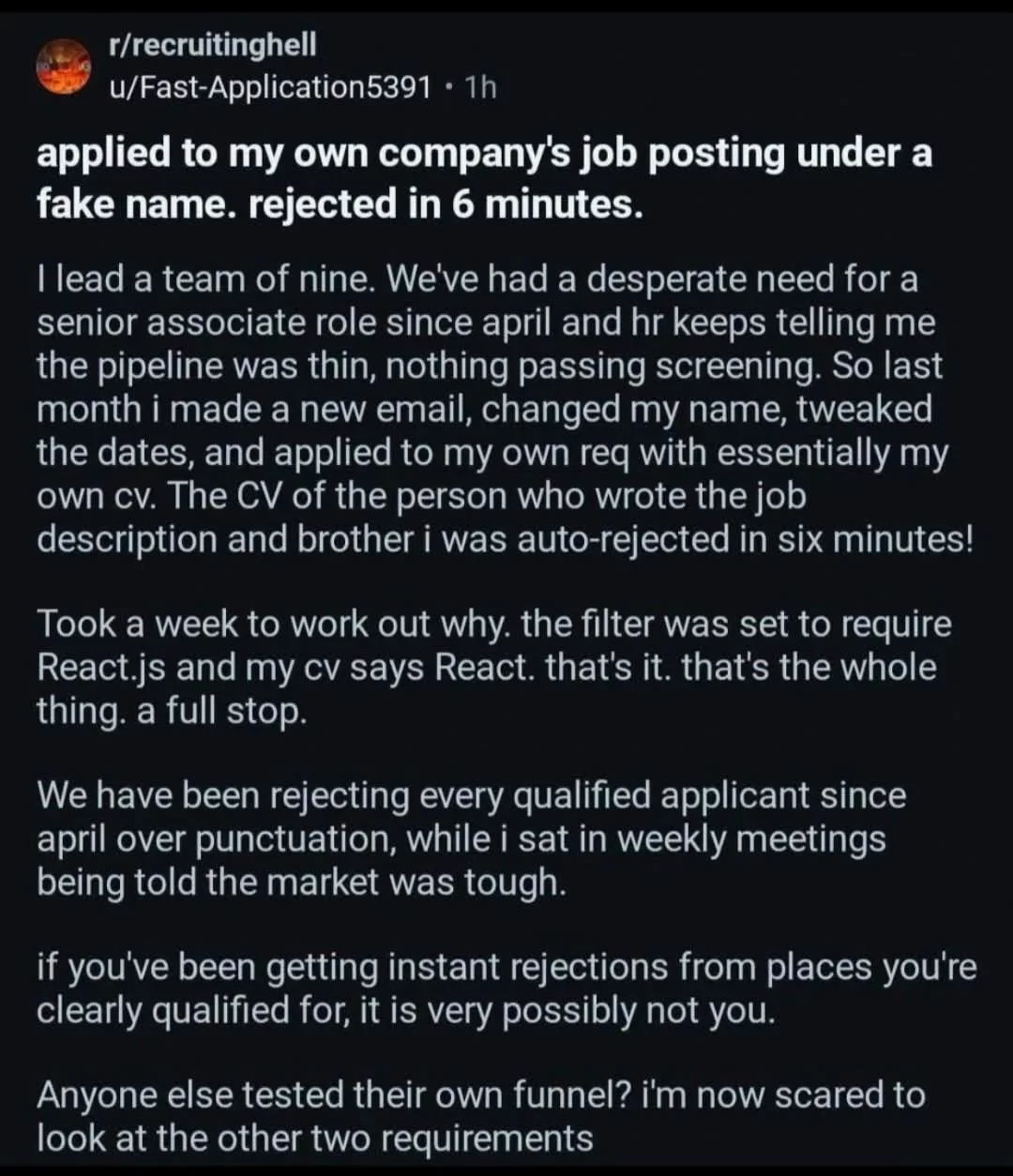
That's the story shared in a Reddit post about a hiring manager who decided to test his company's recruitment process after struggling to fill an open Frontend Engineer position.
The experience highlights a frustrating problem in modern hiring: sometimes, a qualified candidate never gets a chance because their resume doesn't contain the exact keywords a screening system expects.
The hiring process wasn't going well.
Candidates were either failing to move beyond the initial screening stage or disappearing from the recruitment pipeline.
Meanwhile, HR kept reporting the same problem: very few qualified applicants were making it through the initial screening process.
Something didn't add up.
The manager needed another engineer, but the recruitment system wasn't delivering enough candidates for him to interview.
So he decided to investigate.
He then submitted an application for the open Frontend Engineer position at his own company.
The resume was essentially his own, with minor changes to avoid revealing his identity.
He already had relevant professional experience. He was managing the very team that needed another engineer.
Yet the result was surprising.
His application was rejected just six minutes after submission.
Not after a technical interview.
Not after a conversation with HR.
Just six minutes.
That raised an important question: if someone already managing the team couldn't pass the initial screening, how many other qualified engineers were being rejected?
Eventually, he discovered a problem with the company's resume screening configuration.
The system was reportedly looking for one specific keyword:
But his resume listed the technology as:
Although both terms commonly refer to the same JavaScript library, the screening configuration apparently didn't recognize them as equivalent.
As a result, an otherwise relevant resume could fail the initial screening simply because it used a different spelling.
The problem wasn't necessarily the candidate's experience. It was how the recruitment system interpreted that experience.
It's worth noting that this is a reported Reddit anecdote, not an independently verified technical audit of the company's hiring software. The exact screening rules and implementation weren't publicly established in the story.
Nevertheless, the situation illustrates a genuine weakness of poorly configured keyword-based recruitment filters.
Depending on the platform and its configuration, an ATS can help recruiters:
Some platforms primarily organize applications, while others support automated filtering, ranking, or additional screening tools.
The real issue arises when recruitment teams configure these systems too narrowly or rely on automated results without sufficient human review.
If the system doesn't support synonyms, normalization, or equivalent terminology, it might overlook that candidate.
Here are a few other examples of terminology differences that can create problems in poorly configured screening systems:
These terms may be closely related or commonly used interchangeably in their respective contexts, but a basic exact-match filter won't necessarily understand that.
A capable engineer could therefore be overlooked because of wording rather than actual qualifications.
There are many legitimate reasons companies reject applications, including experience requirements, location restrictions, compensation expectations, and competition from other candidates.
However, this story is a useful reminder that a rejection doesn't always reflect your technical ability.
Here are five practical ways to make your resume easier for recruiters and screening software to understand.
If a company asks for React.js experience and you genuinely have that experience, consider using the same terminology in your resume.
For example:
Instead of:
React Developer
Consider:
Frontend Engineer | React.js (React) | TypeScript
You don't need to copy every keyword from the job posting. Use the relevant terms naturally and accurately.
For example:
For better compatibility:
Show how you've actually used it.
For example:
Weak description:
Worked with React and JavaScript.
Better description:
Built and maintained responsive React.js applications using TypeScript, integrated REST APIs, and improved frontend performance.
The second example gives recruiters a clearer understanding of your practical experience.
But rejection emails rarely explain every factor behind a hiring decision.
If you're repeatedly applying for relevant positions without reaching interviews, review your resume's terminology, formatting, and alignment with the job descriptions.
Also consider contacting recruiters professionally or seeking referrals when appropriate.
A resume review can help identify potential problems, but no resume optimization technique guarantees an interview.
The manager wasn't the only person affected by the screening problem. His company was also potentially losing access to qualified candidates.
A recruitment system should make hiring more efficient, not create unnecessary barriers between employers and suitable applicants.
Companies using automated screening should consider several safeguards:
It's that the reported difference between passing and failing an initial screening came down to how one technology was written on a resume.
React versus Reactjs.
A small difference in wording, potentially leading to a completely different hiring outcome.
For job seekers, the takeaway is simple: make your resume clear, accurate, and aligned with the terminology employers use.
For hiring teams, the lesson is equally important: a screening system is only as useful as the rules behind it.
A rejection email tells you that an application didn't move forward. It doesn't automatically tell you how good you are at your job.
That's the story shared in a Reddit post about a hiring manager who decided to test his company's recruitment process after struggling to fill an open Frontend Engineer position.
The experience highlights a frustrating problem in modern hiring: sometimes, a qualified candidate never gets a chance because their resume doesn't contain the exact keywords a screening system expects.
The Hiring Manager Who Couldn't Find a Frontend Engineer
According to the story, the manager was leading a team of nine people and had been trying to hire a Frontend Engineer since April.The hiring process wasn't going well.
Candidates were either failing to move beyond the initial screening stage or disappearing from the recruitment pipeline.
Meanwhile, HR kept reporting the same problem: very few qualified applicants were making it through the initial screening process.
Something didn't add up.
The manager needed another engineer, but the recruitment system wasn't delivering enough candidates for him to interview.
So he decided to investigate.
🧪 The Experiment: Applying for His Own Company's Job
The manager created a new email address, used a different name, and adjusted some employment dates on his resume.He then submitted an application for the open Frontend Engineer position at his own company.
The resume was essentially his own, with minor changes to avoid revealing his identity.
He already had relevant professional experience. He was managing the very team that needed another engineer.
Yet the result was surprising.
His application was rejected just six minutes after submission.
Not after a technical interview.
Not after a conversation with HR.
Just six minutes.
That raised an important question: if someone already managing the team couldn't pass the initial screening, how many other qualified engineers were being rejected?
🔍 The Problem Was a Single Keyword
According to the account, the manager spent an entire week investigating why his application had been rejected.Eventually, he discovered a problem with the company's resume screening configuration.
The system was reportedly looking for one specific keyword:
ReactjsBut his resume listed the technology as:
ReactAlthough both terms commonly refer to the same JavaScript library, the screening configuration apparently didn't recognize them as equivalent.
As a result, an otherwise relevant resume could fail the initial screening simply because it used a different spelling.
The problem wasn't necessarily the candidate's experience. It was how the recruitment system interpreted that experience.
It's worth noting that this is a reported Reddit anecdote, not an independently verified technical audit of the company's hiring software. The exact screening rules and implementation weren't publicly established in the story.
Nevertheless, the situation illustrates a genuine weakness of poorly configured keyword-based recruitment filters.
What Is an Applicant Tracking System (ATS)?
An Applicant Tracking System (ATS) is software companies use to manage job applications and organize their recruitment process.Depending on the platform and its configuration, an ATS can help recruiters:
- Collect and organize resumes.
- Search applications using specific keywords.
- Track candidates throughout the hiring process.
- Apply screening questions or eligibility rules.
- Manage interviews and recruitment communications.
- Identify applicants who match particular job requirements.
Some platforms primarily organize applications, while others support automated filtering, ranking, or additional screening tools.
The real issue arises when recruitment teams configure these systems too narrowly or rely on automated results without sufficient human review.
Why Exact Keyword Matching Can Be a Problem
Consider a Frontend Engineer who lists the following technologies on their resume:- React
- JavaScript
- TypeScript
- Next.js
- REST APIs
Reactjs.If the system doesn't support synonyms, normalization, or equivalent terminology, it might overlook that candidate.
Here are a few other examples of terminology differences that can create problems in poorly configured screening systems:
| Resume Keyword | Alternative Term |
|---|---|
| React | React.js |
| JavaScript | JS |
| Node.js | NodeJS |
| PostgreSQL | Postgres |
| Amazon Web Services | AWS |
| Kubernetes | K8s |
A capable engineer could therefore be overlooked because of wording rather than actual qualifications.
💡 What Job Seekers Can Learn From This Story
The lesson isn't that every rejected resume was rejected by an ATS.There are many legitimate reasons companies reject applications, including experience requirements, location restrictions, compensation expectations, and competition from other candidates.
However, this story is a useful reminder that a rejection doesn't always reflect your technical ability.
Here are five practical ways to make your resume easier for recruiters and screening software to understand.
1. Match the Terminology in the Job Description
Read the job description carefully before submitting your application.If a company asks for React.js experience and you genuinely have that experience, consider using the same terminology in your resume.
For example:
Instead of:
React Developer
Consider:
Frontend Engineer | React.js (React) | TypeScript
You don't need to copy every keyword from the job posting. Use the relevant terms naturally and accurately.
2. Include Both Common and Technical Names
When a technology has multiple commonly used names, mentioning an alternative can help make your experience clearer.For example:
- React.js (React)
- Amazon Web Services (AWS)
- PostgreSQL (Postgres)
- JavaScript (JS)
3. Keep Your Resume Easy to Parse
A visually impressive resume isn't always the easiest document for recruitment software to process.For better compatibility:
- Use recognizable headings such as Skills, Work Experience, and Education.
- Prefer a simple, single-column layout.
- Avoid placing essential information inside images.
- Use standard fonts and clear formatting.
- Submit the requested file format, whether PDF or DOCX.
- Keep your contact information easy to find.
4. Show Your Experience, Not Just Your Keywords
Adding React.js to your skills section isn't enough to demonstrate that you're a qualified React developer.Show how you've actually used it.
For example:
Weak description:
Worked with React and JavaScript.
Better description:
Built and maintained responsive React.js applications using TypeScript, integrated REST APIs, and improved frontend performance.
The second example gives recruiters a clearer understanding of your practical experience.
5. Don't Assume Every Rejection Means You're Unqualified
Receiving an automated rejection shortly after applying can be discouraging, especially when your experience closely matches the position.But rejection emails rarely explain every factor behind a hiring decision.
If you're repeatedly applying for relevant positions without reaching interviews, review your resume's terminology, formatting, and alignment with the job descriptions.
Also consider contacting recruiters professionally or seeking referrals when appropriate.
A resume review can help identify potential problems, but no resume optimization technique guarantees an interview.
What Companies Should Learn From This Hiring Failure
There's another important side to this story.The manager wasn't the only person affected by the screening problem. His company was also potentially losing access to qualified candidates.
A recruitment system should make hiring more efficient, not create unnecessary barriers between employers and suitable applicants.
Companies using automated screening should consider several safeguards:
- Review screening rules regularly: Make sure required keywords accurately reflect the role.
- Recognize equivalent terminology: Account for common abbreviations and alternative technology names.
- Test the application process: Submit representative sample resumes to identify unexpected filtering behavior.
- Audit rejection patterns: Investigate unusually high rejection rates or consistently small candidate pools.
- Keep humans involved: Avoid treating automated screening scores as definitive measures of someone's professional ability.
Final Thoughts: Your Resume Isn't Always the Problem
The most interesting part of this story isn't simply that a manager was rejected from his own company.It's that the reported difference between passing and failing an initial screening came down to how one technology was written on a resume.
React versus Reactjs.
A small difference in wording, potentially leading to a completely different hiring outcome.
For job seekers, the takeaway is simple: make your resume clear, accurate, and aligned with the terminology employers use.
For hiring teams, the lesson is equally important: a screening system is only as useful as the rules behind it.
A rejection email tells you that an application didn't move forward. It doesn't automatically tell you how good you are at your job.